What you can see
Movement, smoke, leaks, warning lights and where the problem appears.
Video · warning lights · locationDrivers can review a noise, warning light or vibration and organise what to raise with a mechanic. Motor traders can connect appraisals, customer follow-up and stock preparation around each vehicle.
Designed to inform, never to replace a qualified mechanic.

Searches a protected vehicle-data connection. Provider credentials stay on the server and are never sent to your browser.
From a quick quote to the recorded sale, bring appraisals, customer follow-up, preparation and stock into one dealer workspace.
Cars usually give you more than one clue. It might be a noise when you turn, a warning light from cold or a vibration under braking.
Signal keeps the vehicle, the video and your description together, helping you narrow down what to check and explain the problem more clearly to the garage.
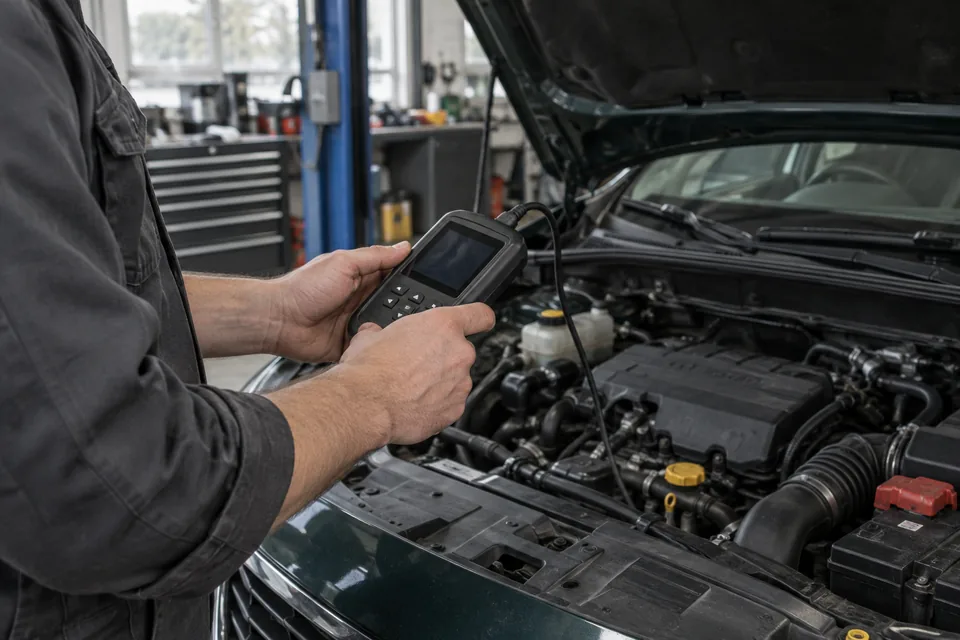
Movement, smoke, leaks, warning lights and where the problem appears.
Video · warning lights · locationThe type of noise, when it happens and what makes it change.
Noise · timing · changeMake, model, year and engine—because the same symptom can mean different things on different cars.
Make · model · engineA simple capture flow turns an uncertain symptom into something easier to explain and investigate.
Use a registration or choose the make, model, year and engine.
Capture 10–30 seconds safely, with the sound and source in frame.
Explain when it happens, how long it lasts and what makes it change.
See ranked possibilities, the clues behind them and useful next steps.
Drivers usually notice a noise, smell, vibration or warning light before they know the name of the fault. That is where Signal starts.
High-pitched sound while slowing
Slow crank, clicking or dim lights
Uneven idle, vibration or hesitation
Humming that rises with road speed
Drips, steam or a sweet smell
Metallic vibration under the vehicle
Signal connects the evidence review with saved records for drivers, a separate operating view for garages and traders, and a community library built from real vehicle outcomes.
Keep your vehicles, MOT and tax dates, service intervals and private symptom evidence together.
Connect quick quotes, buying appraisals, customers, preparation and sale outcomes in your trade workspace.
Use practical buying checks and common-car inspection prompts before spending money.
Compare real symptom videos and return later to record what an inspection or repair actually found.
Included: written symptom review, optional audio and video with timestamped frames, OBD code reference, saved vehicle records, private files and community cases. Online diagnosis is subject to available capacity.
Limits: sampled video frames are still images, not a continuous motion review. Vehicle-data coverage is incomplete, and a remote report cannot confirm a failed part or safe operation.
For your garage: the report separates what you noticed, possible explanations and checks for a technician. A repair quote follows a confirmed fault and operation.
Signal ranks evidence patterns without dressing them up as a percentage. It shows what supports each possibility, what conflicts with it and when a safety concern needs to come first.
“Help me understand the symptom—and help me explain it properly to the person fixing it.”
Signal is not the mechanic. It is the clearer first conversation before the inspection.
Product principle / Signal AutomotiveStart with a Signal.